

INKA 2014
About the exhibit
ONCE. For the first time in Europe, the exhibition shows exclusively the legendary pre-Spanish Inca culture from its beginnings to the colonial period.
HIGH-CARATED. Colourful and brightly patterned textiles, valuable and very rare sacrificial bowls, gold jewellery and mysterious knotted cords. Unique art treasures from Peru, which have never before been seen in Europe. Lenders include the Museo Nacional de Arqueologia, Antropologia e Historia del Perú, Museo Larco Lima, British Museum London, Museo de América Madrid, Museo de Antropología Madrid, Världskulturmuseet Göteborg, Museum der Kulturen Basel, Ethnologisches Museum Berlin, Staatliches Museum für Völkerkunde Munich, Niedersächsisches Landesmuseum Hannover, Staatliche Münzsammlung Munich, Münchner Stadtmuseum, Linden-Museum Stuttgart and private lenders.
FASCINING. Experience the world of the sons of the sun - the kings of the Andes. Colourful and richly patterned textiles from the Inca and colonial periods, valuable and very rare stone sacrificial bowls, gold jewellery, knotted cords and reconstructions of archaeological sites give the visitor a varied impression. They explain the origin, religion, architecture, economy and power relations of the Inca Empire. Paintings, wooden cups and textiles from the colonial period prove the continued existence as a mixed culture under strong European dominance.
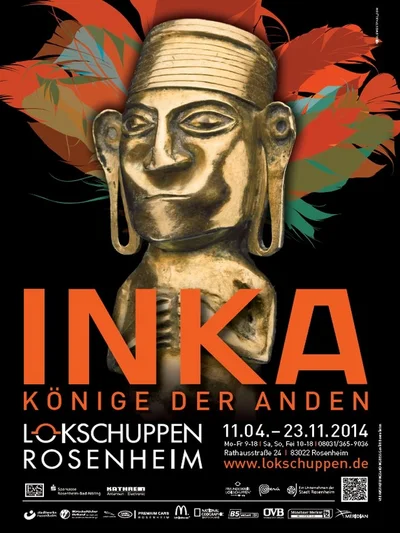
powerful & record-breaking. In the 15th and 16th centuries, the Inca Empire was the largest indigenous empire ever created on American soil.
colourful & elitist.Textiles were more valuable to the Incas than gold; today there are only a few originals left in the world.
world-famous & often travelled.The Incas left world cultural heritage sites:Cusco - the center of the Inca nobility and their "country seat" - Machu Picchu.
same & different.The Inca Empire consisted of 200 different ethnic groups living in different vegetation zones on almost 5,000 km along the Andes from Colombia to Chile.
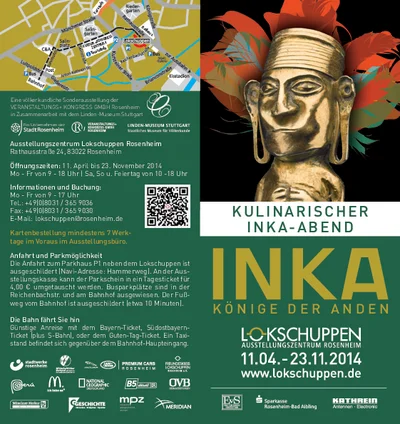
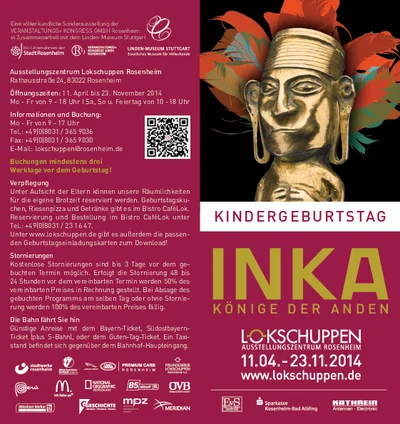
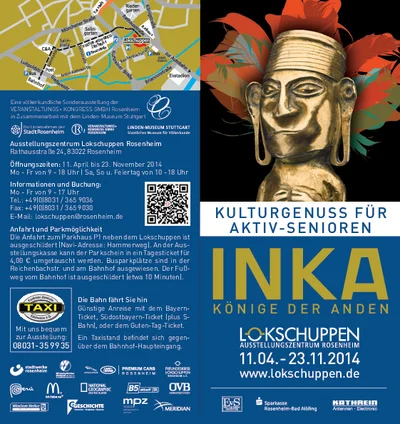
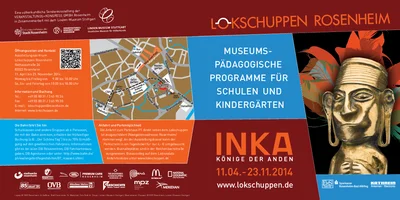
The exhibition was made possible by the cooperation with the Linden-Museum Stuttgart and is under the patronage of the German President Joachim Gauck.